
Medical centres are under constant pressure to improve patient communication, reduce perceived waiting times, support staff efficiency, and create a more reassuring experience from the moment a person walks through the door. In many clinics, however, communication still relies on static posters, printed notices on reception desks, and outdated wall signage that quickly becomes cluttered or irrelevant. Digital signage offers a practical and modern alternative. It helps medical centres present important information clearly, update messages quickly, and create a more organised environment for patients, visitors, and staff.
For a business like Advertise Me, this topic matters because signage is not just about display. It is about communication, trust, and the experience people have in a space. In a healthcare setting, those things carry even more weight. Patients may already be anxious, uncomfortable, or unsure about what to expect. A well planned digital signage system can guide them, inform them, and reassure them without adding pressure to reception staff. It also gives medical centres a flexible communication tool that works every day, across waiting rooms, entrances, hallways, treatment areas, and reception points.
This is one of the key reasons digital signage is becoming more relevant in medical centres across Australia. It is not simply a technology upgrade for appearance. It is a smarter way to deliver timely information in a setting where clarity and calm are essential. Whether the goal is to improve wayfinding, promote health awareness, share service updates, or streamline front desk communication, digital signage gives clinics a practical edge that traditional signs cannot match. You can use our digital signage software to completely manage your digital communications in your medical centre!

Creating a better patient experience from the moment people arrive
The patient experience begins well before the consultation starts. It starts when someone enters the building, looks for the right counter, tries to understand the check in process, or sits down in the waiting area wondering how long things may take. In many centres, this early part of the visit can feel uncertain. Patients may not know whether they need to approach reception, wait to be called, update forms, or move to another area. Staff are then required to answer the same basic questions repeatedly, which increases interruptions and slows the flow of the front desk.
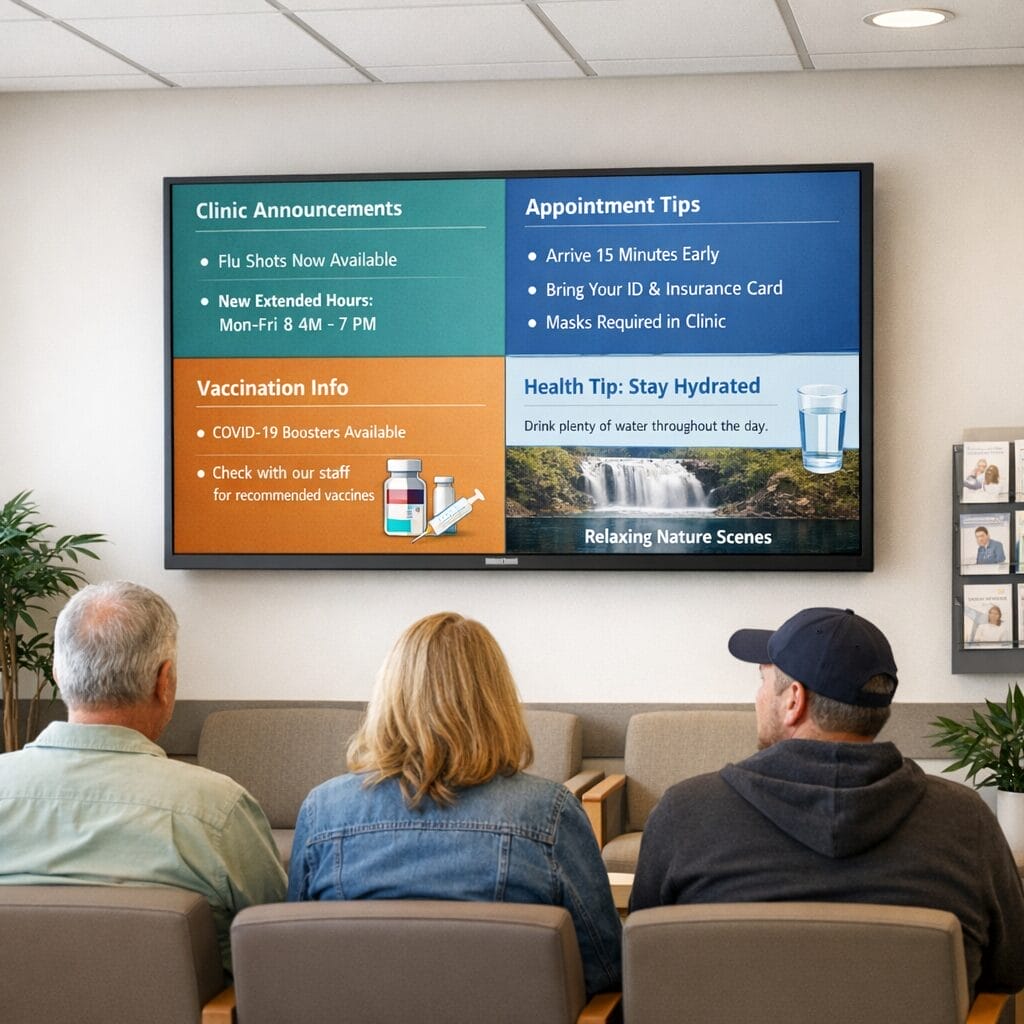
Digital signage can improve that first impression dramatically. A screen near the entrance can welcome patients, explain the check in process, display clinic hours, and highlight any important notices in a format that is easy to read. In a busy waiting room, another screen can provide a rotating set of useful content such as doctor availability, billing reminders, vaccination updates, pathology collection times, and general health messages. This makes the space feel more organised and informative rather than reactive and overcrowded with printed material.
There is also a psychological benefit. Waiting is easier when people feel informed. One of the main frustrations patients experience is not always the actual wait itself, but the uncertainty around it. Clear digital messages can reduce this stress by helping patients understand the process and feel that the clinic is communicating with them. Even simple content such as welcome messages, queue guidance, or delays due to emergencies can make the environment feel more transparent and considerate.
For medical centres trying to improve patient satisfaction, that matters. A cleaner and more controlled communication system supports the broader goal of professional care. It tells patients that the clinic is current, well managed, and attentive to their needs beyond the treatment room.
Reducing the limitations of printed posters and static signs
Traditional signage has always had a role in medical environments, but it has clear limitations. Printed posters fade, become outdated, and often stay on walls long after the information is no longer relevant. Reception desks can become crowded with small signs covering payment policies, appointment reminders, public holiday hours, and service notices. The result is often visual clutter. When too many messages compete for attention, patients notice less, not more.
Digital signage solves this problem by centralising communication into a controlled and flexible display system. Instead of printing and replacing materials each time a detail changes, staff can update content quickly across one screen or multiple locations. If the clinic changes opening hours, introduces a flu vaccine program, updates a bulk billing policy, or wants to announce a temporary service disruption, those messages can be changed without the delays and waste associated with printed signs.
This flexibility is especially useful in healthcare because information changes often. Doctor rosters shift. Public health guidance evolves. Seasonal campaigns come and go. Clinics may also wish to display different information at different times of day. Morning messages may focus on check in and clinic flow, while afternoon content may highlight allied health services or after hours care information. A digital signage system allows this kind of scheduling without requiring constant manual sign replacement.
There is a cost efficiency angle as well. While digital signage requires an upfront investment, it can reduce the repeated costs of printing, design updates, and staff time spent managing physical materials. Over time, that makes it a more practical communication platform, particularly for busy centres that frequently update notices and promotional material.
Helping reception staff work more efficiently
Anyone who has spent time in a medical reception area knows how busy the front desk can be. Staff are answering phones, checking in patients, processing payments, handling referrals, managing appointment changes, and responding to walk in questions all at the same time. Many of the questions they receive are repetitive. Where do I go for pathology. Do I need to pay today. Is Dr Smith running late. Do you offer travel vaccinations. What are your Saturday hours. Repeating these answers all day takes time and attention away from more complex patient needs.
Digital signage can absorb a significant portion of this routine communication. Screens can answer common questions before patients even need to ask them. A well placed display can communicate payment options, consultation policies, mask requirements, specialist locations, and service information in a calm and visible way. This reduces pressure on staff while making the experience smoother for patients.
In practical terms, that means reception teams can focus on more important interactions. Rather than constantly pointing to printed notices or repeating procedural information, they can spend more time helping patients who need personal assistance. For clinics that are trying to improve workflow without increasing staffing costs, this is a valuable operational benefit.
Digital signage can also support internal coordination. In larger medical centres, screens in staff only areas can display schedules, reminders, internal updates, and operational notices. This adds another layer of efficiency by ensuring that important information reaches staff consistently. In a healthcare environment where timing and communication matter, even small improvements in internal visibility can have a useful impact.
Improving wayfinding in larger clinics and multi service practices
Not every medical centre is a small suburban clinic with a single waiting room. Many modern healthcare facilities include multiple practitioners, allied health providers, pathology services, imaging, treatment rooms, and specialist suites within the same building. For patients, especially first time visitors, these spaces can be confusing. Poor wayfinding leads to delays, frustration, missed appointments, and extra demands on reception and nursing staff.
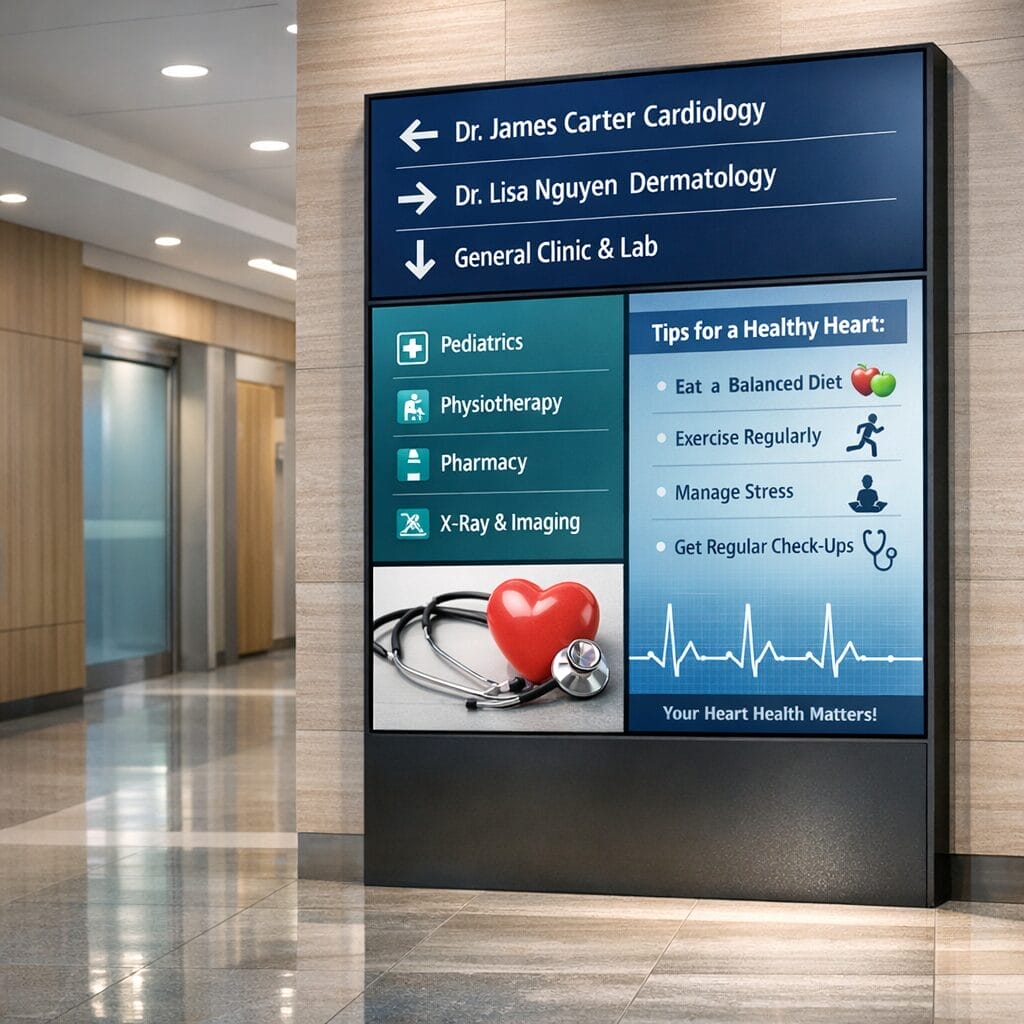
Digital signage such as directory boards can play a major role in solving this. Screens positioned at entrances, hallways, lifts, or key junctions can provide clear directional guidance to help patients reach the right area. This can be especially effective when used alongside static directory signs, because digital content can be updated as tenants change, rooms are reassigned, or temporary service locations are introduced.
In a large facility, digital wayfinding can do more than just point left or right. It can identify current clinic zones, list practitioner names, confirm floor locations, and direct patients to ancillary services such as pathology collection or radiology. If the facility includes multiple service providers, the signage can rotate content for each one while still keeping the overall navigation system coherent.
This becomes even more valuable for elderly patients, parents with children, people with mobility limitations, or visitors who are already stressed. Clear navigation reduces uncertainty and helps the medical centre operate more smoothly. It also contributes to the overall perception of professionalism. A clinic that is easy to navigate feels better organised and more patient focused.
Making waiting rooms more useful and less stressful
The waiting room is one of the most obvious places for digital signage, yet many medical centres still underuse it. Too often, the waiting area is filled with outdated posters, old magazines, and disconnected notices that do little to support the patient experience. A digital screen changes the role of the waiting room from a passive holding space into an active communication channel.
One of the strongest advantages here is the ability to present relevant content in a calm and professional format. Medical centres can display health education materials, seasonal public health reminders, screening advice, chronic disease management information, hydration tips, mental health support resources, and preventive care messages. This turns waiting time into an opportunity for patient education without feeling intrusive.
Digital signage can also help shape the emotional tone of the room. A well designed content mix with soft motion graphics, clear messaging, and a balanced layout can make the space feel more current and less chaotic. Instead of staring at a wall of mismatched paper notices, patients see a controlled stream of useful and reassuring information. That matters more than many clinics realise. Visual order supports emotional calm.
For family clinics, the waiting room screen can also be used to share child health reminders, immunisation schedules, and family service information. For specialist centres, the content can be tailored to the patient population, whether that means cardiac health information, physiotherapy services, skin check awareness, or women’s health programs. The flexibility of digital signage means the messaging can be tailored to the actual services offered by the practice.
Importantly, this should be done with sensitivity. In a healthcare setting, the goal is not to overwhelm people with constant advertising. It is to provide helpful, readable, and relevant communication that complements the space. When done well, digital signage makes the waiting room more informative without making it feel commercial or noisy.
Supporting health education and preventative care messaging
Medical centres are not just places where people receive treatment. They are also one of the most effective environments for health education. Patients already trust the setting and are more likely to pay attention to messages presented there than in many other public spaces. Digital signage gives clinics a direct way to reinforce preventative care and public health communication at the point where it is most relevant.
For example, a clinic can use digital displays to promote flu vaccination timing, skin cancer awareness during summer, bowel screening reminders, blood pressure checks, diabetes management advice, or women’s and men’s health initiatives. These messages can be scheduled according to season, patient demand, or current health priorities. Instead of relying on a poster that may blend into the background, the clinic can present focused educational content in a clear rotating format.
This is valuable from both a patient care and business perspective. Better informed patients are more likely to ask relevant questions, book follow up services, and engage with preventative care. At the same time, the centre can increase awareness of services it already offers, such as care plans, chronic disease support, allied health referrals, immunisation clinics, and health assessments. That supports better use of the clinic’s capabilities while helping patients access care they may not have realised was available.
Digital signage solutions also makes it easier to maintain message quality. Rather than posting a collection of unrelated brochures and hoping patients will notice them, the centre can present carefully designed visual content with stronger readability and consistency. This is especially useful for clinics that want to keep their environment looking clean and professional while still communicating a broad range of healthcare messages.
Keeping information current across multiple locations and services
Medical groups and healthcare networks often operate more than one site. Even a single medical centre may include several departments or service areas that need consistent communication. Managing printed signage across multiple locations can be slow and inconsistent. One branch may update a notice while another still displays the previous version. A policy change may be communicated clearly at reception but not in the waiting room. In healthcare, this inconsistency can create confusion and weaken trust.
Digital signage allows for far better control. Content can be updated centrally and distributed across multiple screens, locations, or service zones. That means a medical operator can maintain brand consistency, policy accuracy, and message quality without relying on manual replacement in every room. If a vaccine campaign is launched, a billing notice changes, or a clinic service expands, the information can be rolled out much more efficiently.
This central management is particularly useful for organisations that want to maintain a consistent patient experience across all touchpoints. The same tone, branding, and quality of information can be reflected at each site while still allowing localised messages where needed. One centre might need to display a local doctor schedule, while the wider network continues to run a shared public health campaign. Digital signage supports both levels of communication at once.
For healthcare providers, consistency matters because it reinforces confidence. Patients expect accurate information, not mixed messages. A professional digital signage system helps medical centres meet that expectation more reliably than scattered printed notices ever could.
Enhancing the professional image of the medical centre
Presentation matters in healthcare. Patients form impressions quickly based on what they see in the reception area, the waiting room, and the general condition of the facility. Cleanliness, order, and clarity all influence how professional and trustworthy a medical centre feels. Signage is part of that picture. A wall covered in ageing posters and taped notices does not communicate the same level of care as a well presented digital display with clear, branded messaging.
Digital signage can elevate the visual standard of the practice in a very direct way. It gives the medical centre a contemporary communication platform that feels organised and intentional. This does not mean the clinic should look flashy or overly commercial. In fact, the best healthcare signage is usually simple, calm, and understated. But it is still modern. It reflects a practice that takes communication seriously and invests in patient experience.
This professional image is especially important in competitive local markets. Patients today compare clinics not only by location and availability, but also by the overall experience. If one medical centre feels dated and disorganised while another feels efficient and easy to navigate, that difference can influence repeat visits and word of mouth. Digital signage contributes to that perception in subtle but important ways.
It can also strengthen branding. A medical centre can use consistent colours, layouts, logos, and tone across all on screen messages. This creates a more unified environment and helps patients recognise the clinic’s identity. For larger healthcare businesses, this brand consistency is a valuable asset.
Promoting services without relying on hard sell marketing
Medical centres need to communicate the range of services they offer, but healthcare promotion requires a careful and respectful approach. Digital signage is useful here because it allows clinics to present service information in an informative rather than aggressive format. Patients can learn about available support while they wait, without feeling pressured.
For instance, a centre might use its screens to highlight travel vaccinations, skin checks, care plans, women’s health consultations, mental health support, allied health partnerships, workplace medicals, or telehealth availability. These are not random advertisements. They are relevant services that many patients may not know the clinic provides. When presented in a calm educational style, this kind of messaging helps patients make better use of available care.
It also supports practice growth in a natural way. If a patient sees that the same centre offers physiotherapy, chronic disease support, or preventative screening, they are more likely to ask about it. This can increase service uptake while improving continuity of care. In that sense, digital signage is not just a marketing tool. It is part of a better information ecosystem within the clinic.
The most effective content in medical settings usually balances three functions at once. It informs, supports, and gently promotes. A screen can remind patients about a health need, explain why it matters, and show that the clinic can help with it. That is a far more valuable interaction than simply hanging a static poster and hoping it gets noticed.
Why placement and content strategy matter as much as the screen itself
Installing a digital screen is only the starting point. To get real value from digital signage in a medical centre, the placement and content strategy need to be planned properly. A screen in the wrong location, with poor readability or irrelevant content, will not improve communication no matter how advanced the technology is. The goal is to match each screen to the patient journey and the practical needs of the space.
At the entrance, the content should focus on welcome messaging, check in instructions, clinic updates, and directional guidance. At reception, it may need to support queue awareness, payment information, or appointment policies. In waiting rooms, it makes sense to focus on health education, service awareness, and calm informative content. In hallways or shared medical buildings, directional and directory content becomes more important. Each location has its own communication role.
Content design matters just as much. In healthcare environments, readability should come first. Text must be large enough to read comfortably, layouts should be uncluttered, and motion should be subtle rather than distracting. Colour choices should support clarity and calm. Messaging should be short enough to absorb quickly but detailed enough to be useful. This is not the same as retail signage, where bold promotion may be the priority. In a medical centre, communication needs to feel reassuring and professional.
This is where an experienced signage provider can make a real difference. Medical centres benefit most when the signage solution is designed around patient flow, communication needs, and the practical realities of the clinic. It is not only about supplying a display. It is about creating a signage system that works in the environment every day.
Using visual solutions that align with healthcare environments
Healthcare spaces have unique requirements. They need to look clean, calm, and trustworthy. Any signage solution introduced into that environment must support those qualities rather than compete with them. Digital signage works best in medical centres when it is integrated thoughtfully into the existing interior, not treated as an afterthought.
This is one reason it makes sense to draw on examples and visual inspiration from specialist signage providers such as Advertise Me. Real world signage imagery helps medical practices see how screen installations can complement reception desks, waiting rooms, and service corridors without overpowering the space. The right visual execution can make digital displays feel like a natural part of the clinic’s communication system rather than a generic television mounted on a wall.
If there are suitable images on the Advertise Me website showing professional signage installations, they can be used effectively throughout an article or proposal as examples of what modern communication displays look like in real business settings. Those visuals help decision makers understand scale, placement, screen orientation, and finish. In healthcare, where trust and presentation matter, seeing signage used professionally is often far more persuasive than reading about it in abstract terms.
This is particularly relevant for practice owners and managers who are considering upgrades but have not yet visualised how digital signage would fit into their space. Examples of well executed commercial signage can bridge that gap. They show that digital displays can look polished, informative, and entirely appropriate for patient facing environments.
A practical investment for modern medical centres
Medical centres are always balancing patient care, operational efficiency, compliance, staffing pressure, and business sustainability. Any investment in the physical environment needs to do more than look good. It needs to solve a real problem or improve a meaningful part of the patient journey. Digital signage does both. It improves communication, reduces repetitive staff interruptions, supports patient education, and gives clinics a more adaptable way to share important information.
It also has the advantage of long term relevance. Unlike one off printed campaigns, digital signage remains useful because the content can evolve with the needs of the clinic. What starts as a waiting room information screen can continue to support new service launches, seasonal campaigns, public health notices, and practice updates year after year. That flexibility is one of its strongest business benefits.
For centres that want to modernise without creating unnecessary complexity, digital signage is a practical next step. It meets patients where they already are, inside the clinic, at the exact moments when guidance and reassurance are most needed. It also supports staff by reducing communication friction in one of the busiest parts of the healthcare workflow.
As patient expectations continue to rise, medical centres need communication tools that are as responsive and professional as the care they aim to provide. Digital signage is no longer just a nice addition to a modern fit out. It is a smart, functional asset that helps healthcare environments work better for everyone who walks through the door.


Our latest digital signage software projects
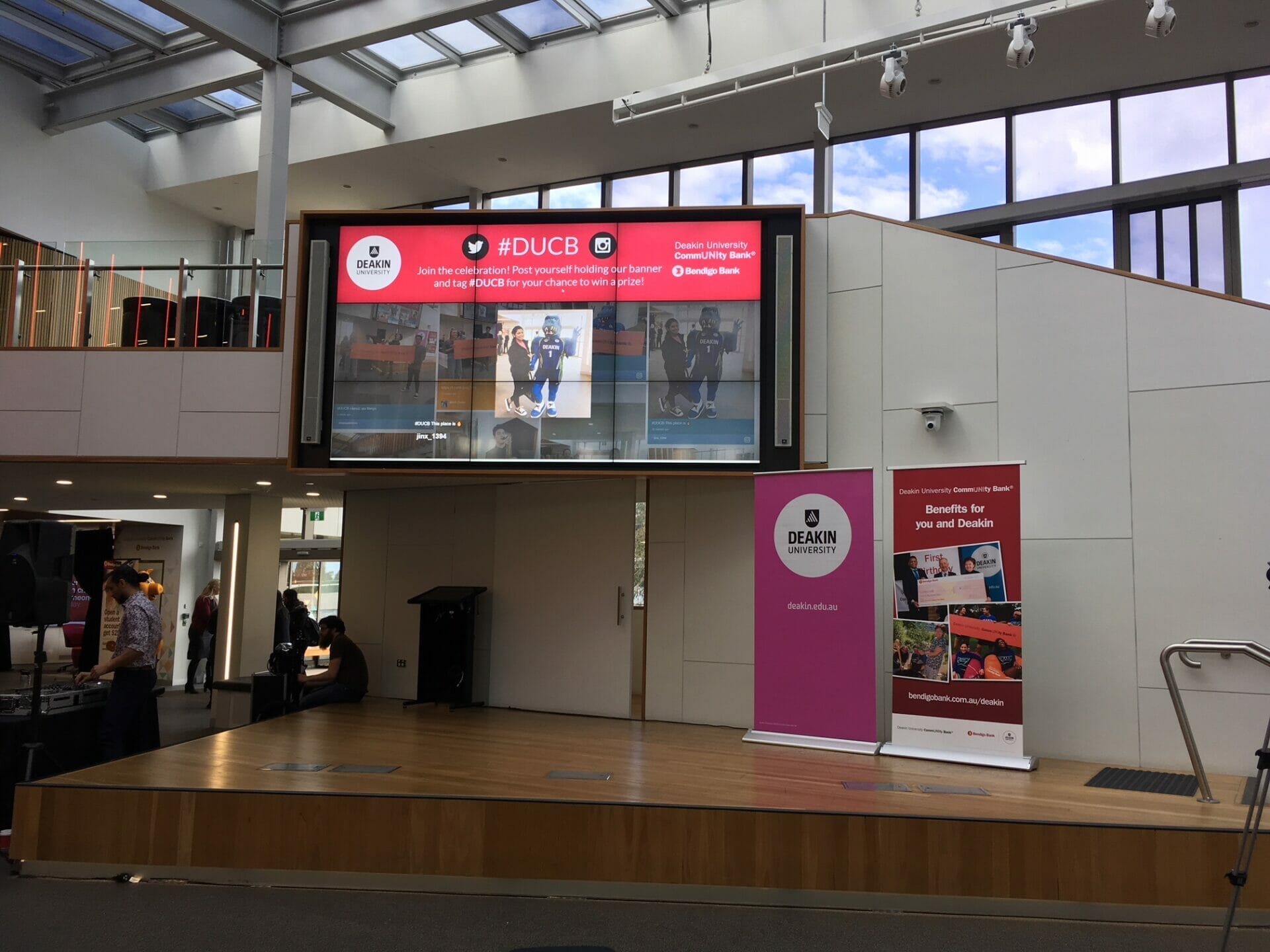
DEAKING UNIVERSITY EVENT SOCIAL WALL
About this digital signage project We used our [...]
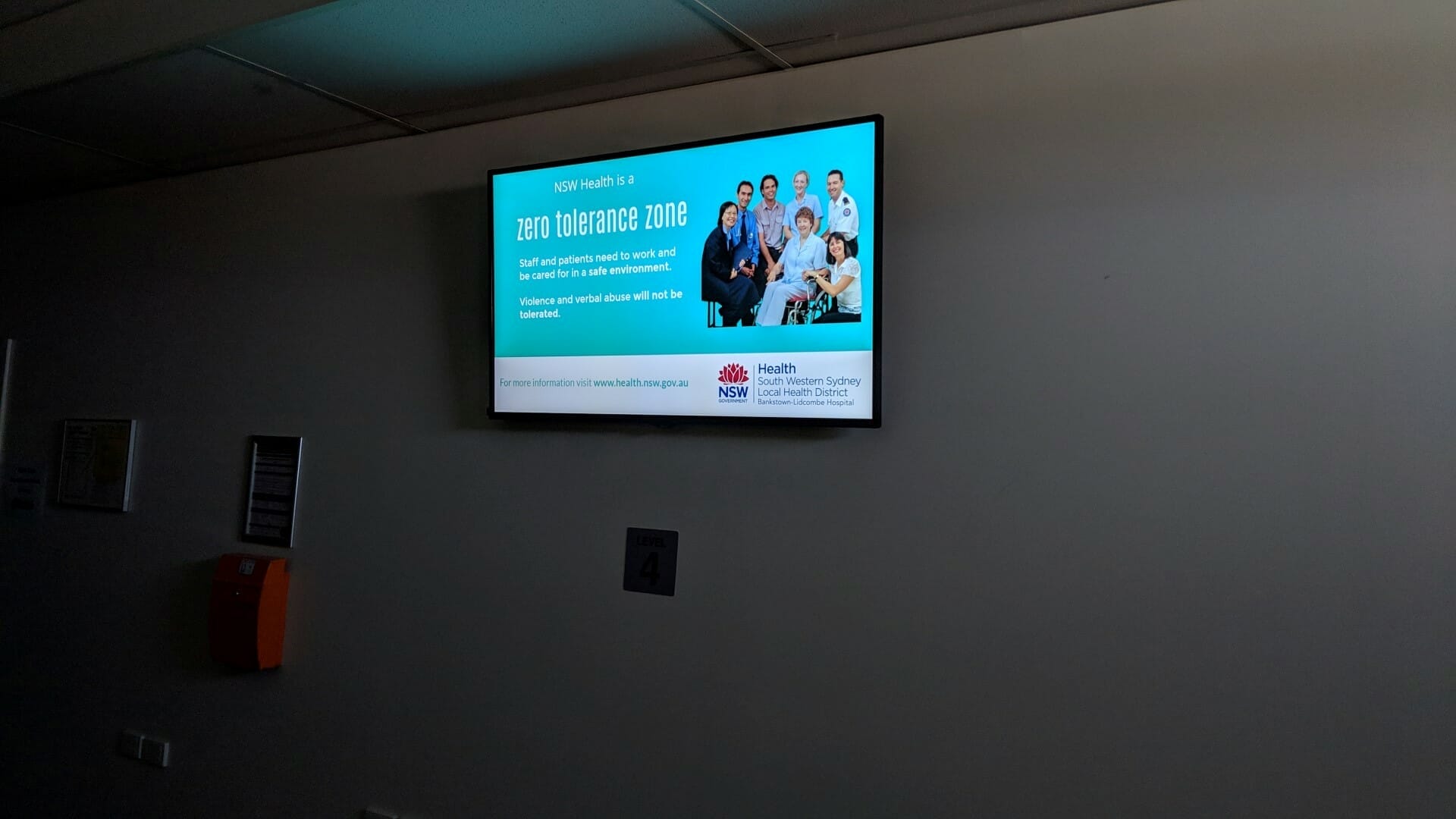
HOSPITAL DIGITAL SIGNAGE FOR BANKSTOWN HOSPITAL
About this digital signage project We used our [...]

UNSW HEALTH BEYOND RESEARCH & INNOVATION SHOWCASE
About this digital signage project We used our [...]
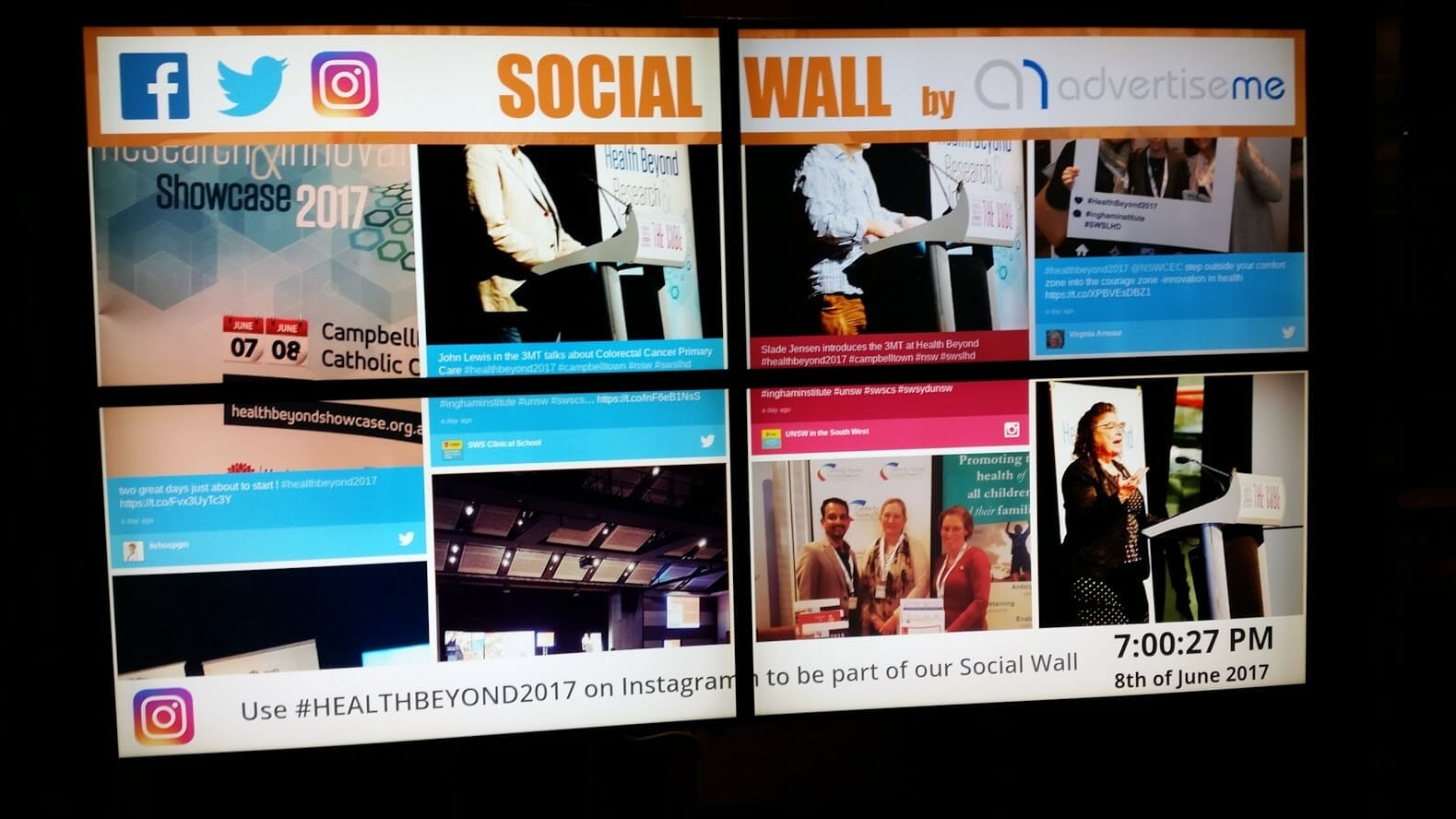
INGHAM INSTITUTE HEALTH AND BEYOND
About this digital signage project We used our [...]
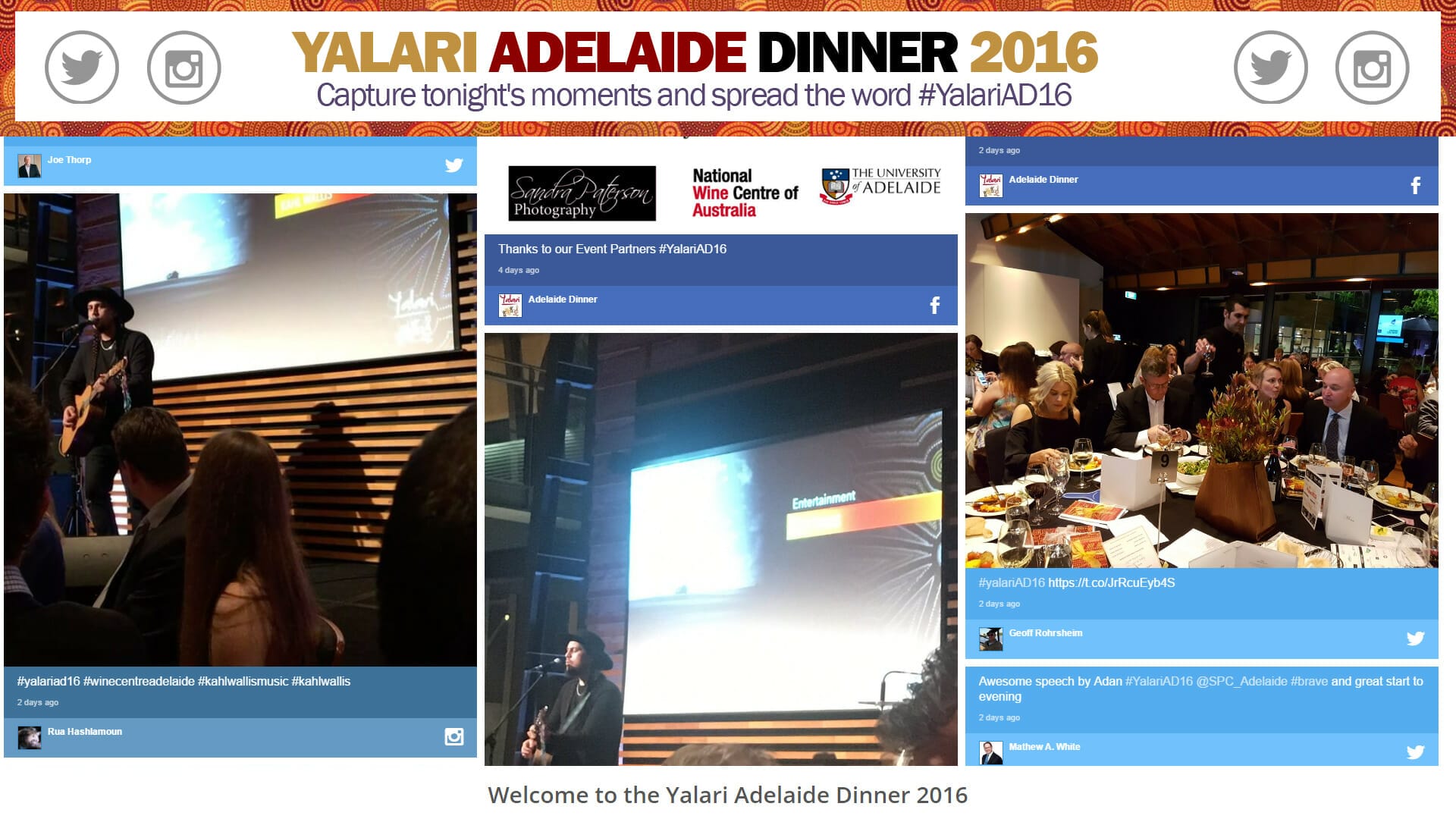
YALARI DINNER EVENT DIGITAL SIGNAGE
About this digital signage project We used our [...]